Beyond the Classroom: Why Parent Involvement and Coordinated Whole-Student Support Services Matter
A student's growth doesn't stop when the school bell rings. For students with disabilities, the hours after school, the weekends, the summers, and the years after graduation matter just as much as the time spent in a classroom.
The progress a student makes with their teachers and therapists is real. But it lasts when the people and supports around that student keep it going. That's why two things sit at the center of how we think about student success: strong partnerships with families, and Coordinated Whole-Student Support Services that carry care beyond our walls.
Parents are the experts on their children
No one knows a child better than their family. Parents see what we can't: how their child handles a crowded grocery store, what calms them after a hard day, which skills show up at home and which ones disappear.
That knowledge makes everything we do better. When families are active partners, we can:
Set goals that matter in real life. An IEP goal means more when it reflects what a family actually needs at home and in the community.
Practice skills everywhere, not just at school. A communication strategy used in class and at the dinner table sticks faster than one used in only one place.
Spot changes early. Families often notice a new challenge, a regression, or a breakthrough before anyone else does.
Keep the student's voice at the center. Parents help us understand what their child wants for their own future.
Federal law already recognizes this. Under IDEA, parents are full members of the IEP team, not guests at the table. Our job is to make that partnership real every day, not just at the annual meeting.
Coordinated Whole-Student Support Services
Coordinated Whole-Student Support Services bring together the supports a student and family need, coordinated around one shared plan. Instead of a family juggling a dozen separate appointments, providers, and phone calls, the team works together around the student.
Depending on the student, that team might include:
Special education teachers and paraprofessionals
Speech, occupational, and physical therapists
Behavioral and mental health support
Social workers and case managers
Medical and health providers
Community agencies, vocational rehabilitation, and employers
Family members and natural supports like friends, neighbors, and faith communities
When these supports talk to each other, students don't fall through the cracks. A behavior strategy that works at school gets shared with the family and the after-school program. A health change gets communicated to the classroom. Families spend less energy coordinating and more energy simply being a family.
Continuity of care: the transitions that matter most
The riskiest moments for students with disabilities are often the transitions: a new school, a new grade, a summer break, and especially the move from school to adult life. Services that were in place for years can end abruptly. Families can suddenly find themselves navigating adult systems on their own.
Continuity of care means planning for those moments long before they arrive. Under IDEA, transition planning must be part of a student's IEP by age 16, but the best planning starts much earlier. It covers questions like:
What does this student want to do after graduation: work, further education, a day program, independent living?
Which adult services and agencies should be connected now, while the school team is still in place?
What skills does the student need to practice in the real world, through community-based instruction and work experiences?
Who will help the family coordinate once school services end?
When families and support partners are part of this planning from the start, graduation becomes a handoff, not a drop-off. The student walks into adulthood with a team that already knows them.
How families can get involved
Involvement doesn't have to mean attending every event or volunteering every week. Small, steady connections make the biggest difference. Here are a few places to start:
Share what you see at home. Tell your child's team what's working, what's hard, and what's changed. Nothing is too small to mention.
Come to the IEP meeting ready to lead. Bring your questions, your goals, and your child's hopes. If your child can participate, invite them.
Ask about the full team. Find out which services your child receives, who provides them, and how those providers communicate with each other.
Start talking about the future early. Ask about transition planning, adult agencies, and community experiences well before your child turns 16.
Carry strategies home. Ask teachers and therapists for one or two things you can practice together during everyday routines.
Build your own support network. Connect with other families, parent support groups, and community resources. You don't have to do this alone.
Building the circle together
Every student deserves a circle of support that doesn't break when the school day ends or when graduation comes. Schools can't build that circle alone, and neither can families. It takes all of us: educators, therapists, community partners, and above all, parents and caregivers.
If you're a parent or caregiver, we want to hear from you. Reach out to your child's teacher or case manager, ask about the services available to your family, and let us know how we can partner with you. Together, we can make sure the progress your child makes today carries them into a full, independent future.
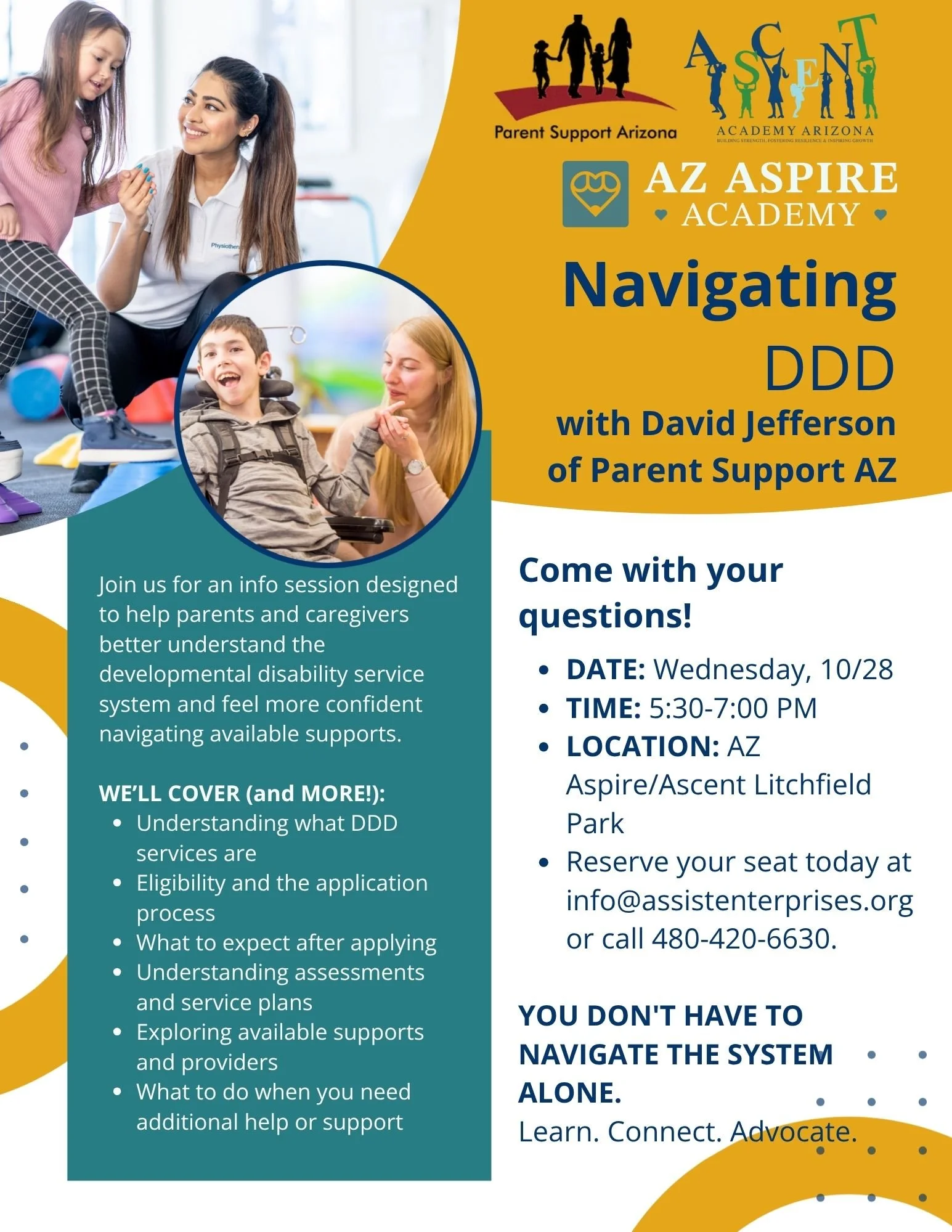
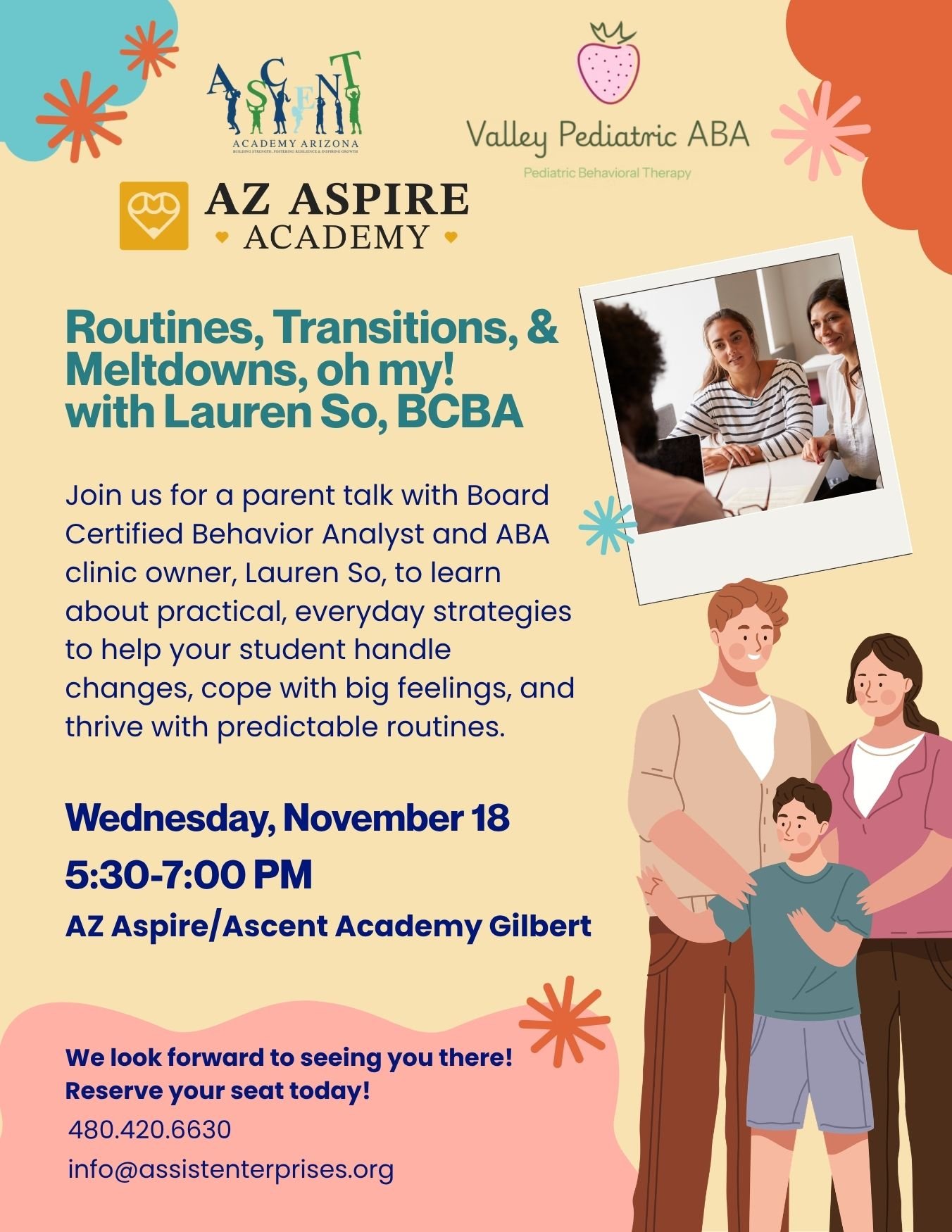
At AZ Aspire, we believe parents are experts in their children. This is why we offer Parent Events (alongside a fun student event) so that Parents can connect and learn more about some of their most frequently requested topics.